Best Midi Lathes 2026: Ranked and Compared
The best midi lathes for 2026, ranked: the Jet JWL-1221VS pick, the budget WEN 3424T, the Laguna Revo 1216 for outboard work, and the used Rikon 70-220VSR.

The best midi lathe for most woodturners is the Jet JWL-1221VS at $990: variable speed from 60 to 3,600 RPM, 12.5-inch swing, 21 inches between centers, and a five-year warranty. The WEN 3424T at $369 is the honest entry point for someone trying the craft before committing. The Rikon 70-220VSR is discontinued as of early 2026; used examples sell in the $400 to $650 range.
A midi lathe runs on a standard 115-volt household outlet, swings 12 to 12.5 inches over the bed, and fits in a garage or basement shop corner. All four machines here meet those conditions.
Comparison at a glance
| Machine | Price | Swing | Between Centers | Motor | Speed Range |
|---|---|---|---|---|---|
| WEN 3424T | $369 | 12 in | 18 in | 4.5A | 520/900/1,400/2,150/3,400 RPM (belt) |
| Rikon 70-220VSR | $400-650 (used) | 12.5 in | 20 in | 1 HP | 250-3,850 RPM (variable) |
| Jet JWL-1221VS | ~$990 | 12.5 in | 21 in | 1 HP | 60-3,600 RPM (variable) |
| Laguna Revo 1216 | $1,099 | 12.5 in + 16 in outboard | 15.5 in | 1 HP DC | 50-3,500 RPM (variable) |
All four use 1-inch by 8 TPI spindle thread. Chucks, faceplates, and worm screws cross between them without adapters.

WEN 3424T: the honest entry point
At $369, the WEN 3424T is the lowest price in the class by a wide margin. Five fixed belt-drive speeds: 520, 900, 1,400, 2,150, and 3,400 RPM. Speed changes require stopping the lathe and manually moving the drive belt to a different pulley position. No electronic variable speed.
That limitation is real. On a variable-speed machine, you dial in the RPM you want and turn. On the WEN, you choose the nearest fixed step. For most beginner work, picking between 520 and 900 RPM is manageable. For experienced turners who set specific RPM by blank diameter, the belt-change workflow adds friction.
What the WEN gets right: 18 inches between centers, 12-inch swing, and a price that makes trying woodturning a low-stakes decision. The WEN vs Jet comparison covers the full break-even analysis on when the $621 price difference pays back.
Rikon 70-220VSR: used-market only
The Rikon 70-220VSR is no longer available new. Rikon discontinued the model in early 2026 and replaced it with the 70-1516VSRK. Used 70-220VSR examples appear on eBay and Facebook Marketplace in the $400 to $650 range. The current Rikon midi lathe, if you want a new unit, is the 70-1516VSRK: 1.25 HP DC brushless motor, 250 to 3,200 RPM, 12-inch swing, 16.5 inches between centers, bundled with a Nova Z3 chuck.
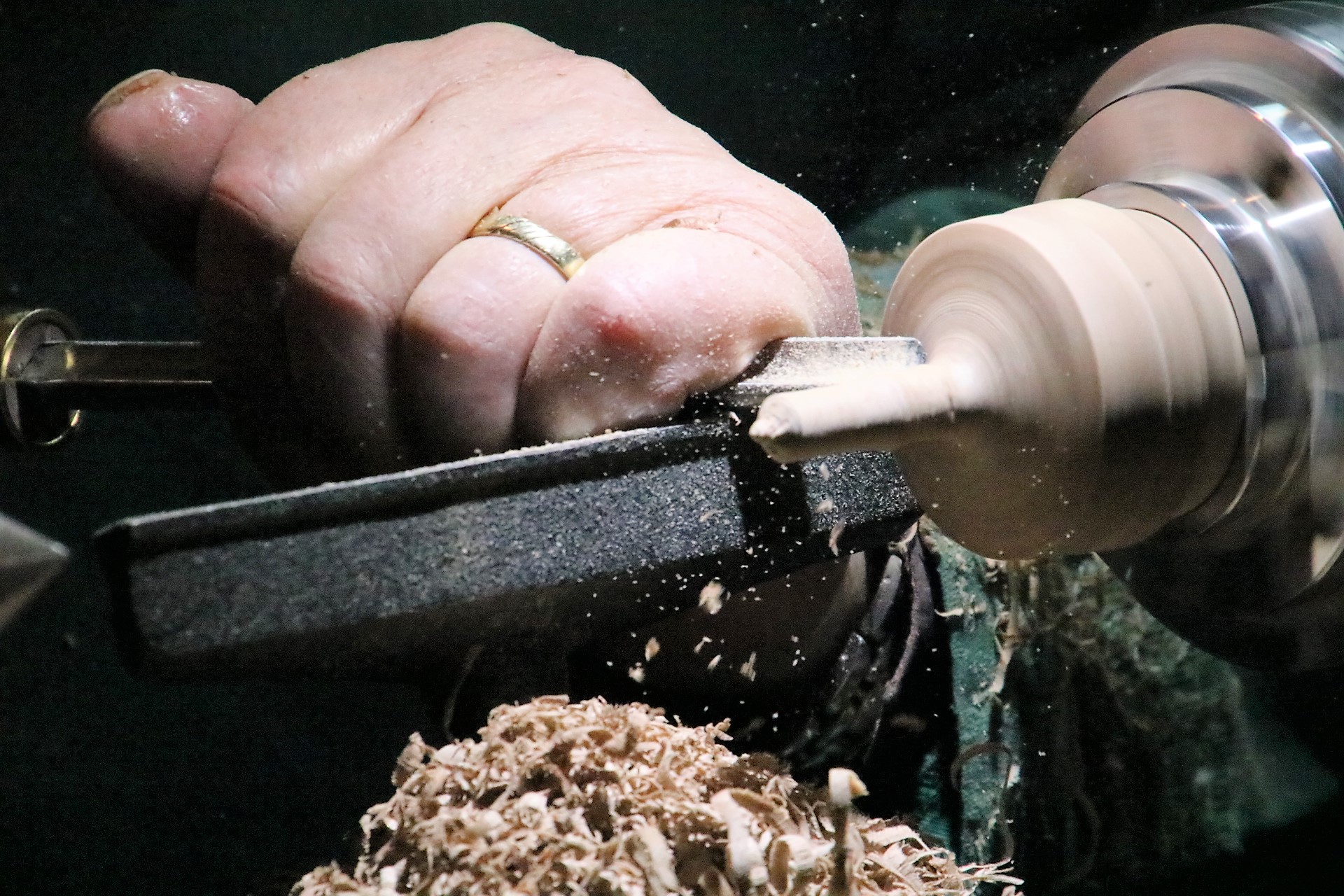
What a used 70-220VSR offers: 1 HP, 250 to 3,850 RPM single variable range, 12.5-inch swing, 20 inches between centers. More spindle range and between-centers than the WEN, and variable speed from 250 RPM. The full specs and owner reports are in the Rikon 70-220VSR review.
Buying a used 70-220VSR at $500 makes sense if the machine runs true, the bed shows no twist, and the motor sounds clean on startup. The downside: discontinued means no active parts pipeline and no warranty. Buy from someone you can talk to and test the machine before paying.
Jet JWL-1221VS: the standard pick
The Jet JWL-1221VS is the most consistently recommended first serious lathe in AAW club discussions and turning forums. At $990, it offers 1 HP, electronic variable speed from 60 to 3,600 RPM, 12.5-inch swing, and 21 inches between centers.
The variable speed is the main advantage over the WEN. From 60 RPM on the low end, you can start a rough, unbalanced blank safely and bring it up as it rounds out. The high end at 3,600 RPM covers pen turning and fine finishing work. The 1 HP motor handles 12-inch bowl blanks in hardwood without laboring.
The five-year warranty is the other argument. Beginners have catches, tools rest flex under hard cuts, and there will be moments of confusion about what just happened. A five-year warranty covers the whole learning period. Jet’s service network is deep enough that parts and support are accessible when you need them.
At 121 pounds, the JWL-1221VS has enough mass to damp vibration from rough blanks. Securing it to the bench improves the experience on heavy, unbalanced stock.
Laguna Revo 1216: the outboard option
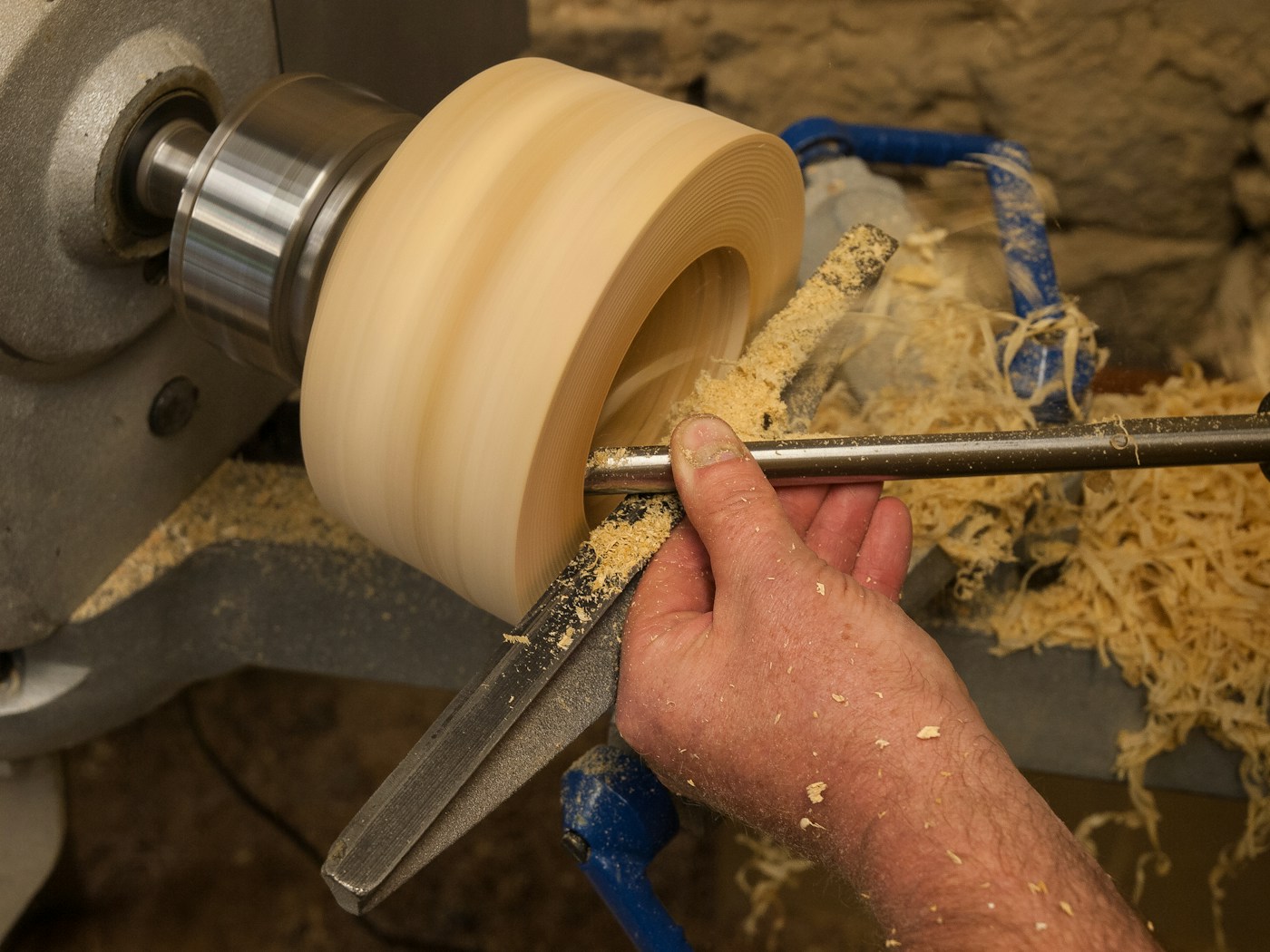
The Laguna Revo 1216 sits at $1,099 and offers one capability the other machines here do not have: 16-inch outboard turning. Outboard turning mounts a faceplate on the outboard end of the spindle and swings a large blank past the bed on the left side. For platters and shallow bowls up to 16 inches in diameter, on a 115-volt circuit, this is the only way to get there.
Over the inboard bed, the Laguna swings 12.5 inches, same as the Jet and Rikon. The trade-off is between-centers length: 15.5 inches, which is 5.5 inches less than the Jet’s 21 inches. For spindle work, chair legs, and tool handles, that gap is real.
Speed runs from 50 to 3,500 RPM across three belt positions (low, mid, high). The motor is a 1 HP DC permanent magnet unit. Note that the Laguna Revo 1216 requires a dedicated 15-amp circuit; it will trip a shared breaker.
Who should buy what
Buy the WEN 3424T if you want to try woodturning before committing $1,000. The five fixed speeds and 12-inch swing are real limits, and the 18-inch between-centers handles most beginner projects. The WEN is the machine to turn on until you know what you actually want to turn.
A used Rikon 70-220VSR in good condition at $500 is a solid upgrade over the WEN: variable speed, 12.5-inch swing, 20 inches between centers. Buy it only from a seller who will let you inspect and run the machine first. For a new Rikon midi lathe, the current model is the 70-1516VSRK.
Buy the Jet JWL-1221VS if you know you want to turn bowls and spindles and you want a machine that will not limit you. The five-year warranty, 21-inch between centers, and 60 to 3,600 RPM range cover everything in the midi class without compromise. This is the right answer for most buyers.
Buy the Laguna Revo 1216 if outboard turning is on your project list. It is the only 115-volt machine that swings 16 inches outboard. If large platters and shallow bowls are the goal, the $110 premium over the Jet is the right call. If most of your work is bowls to 12 inches and spindles to 21 inches, the Jet wins.
The chuck guide covers the four-jaw scroll chuck every machine here needs. All four use 1-inch by 8 TPI, so one Nova G3 or comparable chuck with the correct insert works across the whole class without adapters.
For buyers unsure whether a midi lathe or a full-size machine is the right starting point, the midi versus full-size guide maps the project-size decision that determines which class fits your work.