Jet JWL-1840EVS Review: Full-Size Floor Lathe at $3,959
Jet JWL-1840EVS reviewed: 2 HP EVS, 18.5-inch swing, 40.5-inch between centers, a sliding headstock, and $3,959 set against the Powermatic 3520C.
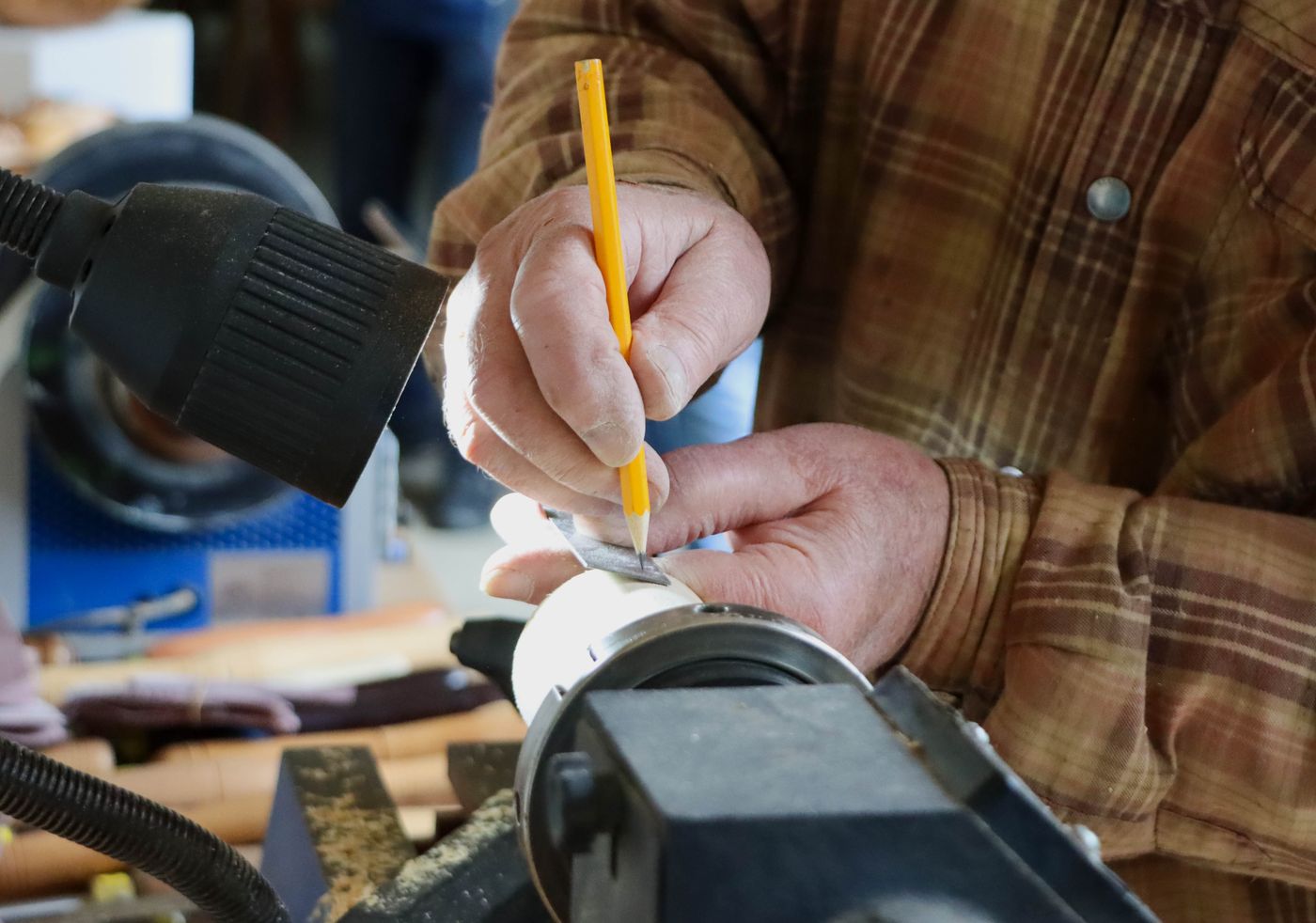
The Jet JWL-1840EVS is a 2 HP, 230V full-size floor lathe with electronic variable speed from 40 to 3,200 RPM, 18.5-inch swing, and 40.5 inches between centers. The headstock slides the full length of the bed and rotates 360 degrees. It retails for $3,959 as of June 2026.
Moving from a midi lathe to the JWL-1840EVS is a different level of commitment: different voltage requirement (230V wiring), different weight class (414 lbs versus 70 to 125 lbs for midi machines), and a different spindle thread (1-1/4-inch by 8 TPI versus the midi-class 1-inch by 8 TPI). What you get in exchange is 18.5 inches of swing, 40.5 inches between centers, and a sliding headstock that makes outboard turning and end-grain work practical without a separate fixture.
The spec sheet
| Spec | JET JWL-1840EVS |
|---|---|
| Motor | 2 HP, TEFC induction |
| Voltage | 230V single phase, 5A |
| Circuit requirement | 20A dedicated circuit |
| Speed range (low belt) | 40 to 1,200 RPM |
| Speed range (high belt) | 100 to 3,200 RPM |
| Speed type | Electronic variable speed, dual belt range |
| Swing over bed | 18.5 inches |
| Swing over banjo | 14.25 inches |
| Distance between centers | 40.5 inches |
| Inboard spindle thread | 1-1/4 inch x 8 TPI |
| Outboard spindle thread | 3/4 inch x 16 TPI (LH) |
| Headstock taper | MT2 |
| Tailstock taper | MT2 |
| Tailstock quill travel | 4.25 inches |
| Indexing positions | 36, at 10-degree increments |
| Spindle height (with risers) | 43.25 inches |
| Weight | 414 lbs |
| Warranty | 5 years |
Sources: Woodcraft and Craft Supplies USA product listings, verified June 2026.
Voltage note: The JWL-1840EVS requires a dedicated 230V, 20A circuit. Standard 120V household outlets will not run this machine. If your shop does not already have 230V wiring at the lathe position, add electrician cost to the project before the machine arrives.
Spindle thread note: The 1-1/4-inch by 8 TPI inboard thread is the full-size lathe standard. Midi-lathe chucks and faceplates (1-inch by 8 TPI) will not thread directly onto this spindle. Chuck bodies with interchangeable inserts accept a 1-1/4-inch by 8 TPI insert as a separate purchase.
EVS and the two-range speed system
The EVS designation means speed is controlled by a frequency inverter. Within each belt range, the dial provides continuous, stepless speed from the range minimum to its maximum. The inverter holds the set speed under changing load, compensating when a cut deepens or a blank’s balance changes.
The two belt positions provide the overall range: low (40 to 1,200 RPM) handles bowl roughing, large faceplate work, and heavy cuts on fresh green wood; high (100 to 3,200 RPM) handles spindle work, pen turning, and finishing passes. Switching ranges requires stopping and repositioning the belt inside the headstock cover.
The 40 RPM floor. Most machines in this class bottom out at 60 to 100 RPM. The JWL-1840EVS’s 40 RPM minimum is the widest safety margin for starting large unbalanced blanks at controllable speed before they come into round. An 18-inch green-wood bowl blank with significant mass asymmetry benefits from the extra headroom at the low end.
The digital RPM display shows current speed and is visible from the turning position. Owners in multiple forum threads noted this as useful for production work: record the RPM that worked for a specific diameter, dial it back in reliably on the next session.

The sliding, rotating headstock
This is the JWL-1840EVS’s defining feature. The headstock does not sit fixed at the left end of the bed. It slides the full 40.5-inch bed length and locks at any position. It also rotates 360 degrees, with seven preset detent positions.
The practical result: rotating the headstock so the spindle faces the end of the machine and sliding it toward the center of the bed lets you turn large face-grain pieces outboard of the bed, where the 18.5-inch over-bed swing limit no longer applies. The effective outboard capacity depends on floor space available in your shop, not a fixed specification.
The outboard spindle thread is 3/4-inch by 16 TPI left-hand, which accepts left-hand-thread faceplates for outboard work. Rotation direction reverses on the outboard end, so tool approach technique reverses accordingly.
For extended spindle work, an optional 20-inch Extension Bed (Jet part 719401) is available. A Tailstock Swing Away accessory (part 719001) provides additional flexibility for long between-centers work.
Forty inches between centers
At 40.5 inches, the JWL-1840EVS has the longest spindle capacity in the lineup. For comparison: the Jet JWL-1221VS runs 21 inches, the Wen 3424T runs 18 inches, the Laguna Revo 1216 runs 15.5 inches, and the Powermatic 3520C runs 35.5 inches. The Jet’s 40.5 inches is the longest between-centers at any price in the class.
For production spindle work: bedposts, table legs, stair balusters, multi-section floor lamps. A full-length Windsor chair leg can be 42 to 48 inches in practice, so even the JWL-1840EVS has a ceiling for the longest individual spindles. But for all standard furniture components, 40.5 inches covers the work that requires a floor lathe.
Build quality and physical design
At 414 lbs, the JWL-1840EVS arrives in a crate. A two-person installation with a machine dolly or engine hoist is standard practice. Four 4-inch cast iron riser blocks are included and bring the spindle height to 43.25 inches from the floor. Adjustable leveling feet stabilize the machine on uneven concrete.
The 414-lb mass absorbs vibration from most turning work. Owner reports from AAW Forum and LumberJocks describe it as stable under typical bowl and spindle loads. For extreme cases, such as green-wood bowl blanks with severe mass asymmetry, the 726-lb Powermatic 3520C has more inertia. Most production turning at this swing class does not push the limits of 414 lbs.
Included accessories: 12-inch tool rest, spur drive center (MT2), live single-bearing center, live cup center, faceplate, wrench, knockout bar, adjustable feet, leg-mounted tool shelf, and a rubber tool mat on the headstock.
Owner feedback
Forum reports from AAW and LumberJocks, and a modernwoodturning.com review (verified June 2026), showed a consistent pattern.
What owners praised: The sliding headstock was uniformly cited as the machine’s distinctive advantage, valued specifically for end-grain work and large platter turning. The EVS system and digital readout earned consistent approval for production repeatability. One AAW forum comment summarized the value well: “Get the 1840 and spend the $2,000 difference [vs the Powermatic 3520C] on a class with a master turner.” This framing treats the JWL-1840EVS as a fully capable production tool, not a compromise.
The belt-change trade-off: Within a speed range, the EVS dial is smooth. Switching from bowl work (low range) to pen turning (high range) requires the belt-change stop. Turners mixing project types in a single session noted this as a friction point in longer reviews.
Inverter longevity: LumberJocks and Sawmill Creek threads on EVS platform lathes in general (including the related 1642EVS) noted occasional inverter failures over multi-year use. No confirmed failures specific to the 1840EVS were documented in sources reviewed. Worth noting as a potential service item on an older used unit.
How it stacks up
Against the Powermatic 3520C ($5,999): The PM costs $2,040 more and weighs 726 lbs versus 414 lbs. It has more swing (20 inches vs 18.5) and more indexing positions (48 vs 36). The Jet has longer between-centers (40.5 vs 35.5 inches). Both are 2 HP, 230V, 5-year warranty, MT2 taper, 1-1/4-inch by 8 TPI spindle. The Powermatic’s extra 312 lbs of mass matters most for rough green-wood bowl work; the Jet’s longer bed matters for production spindle work. The full analysis is in the Powermatic 3520C review.
Against the Jet JWL-1221VS ($989.99): The 1221VS is a 12.5-inch midi lathe at 125 lbs with a 1-inch by 8 TPI spindle. The JWL-1840EVS is four times the price, three times the weight, and produces 50 percent more swing. The 1221VS handles most hobby bowl and spindle work; the 1840EVS is the machine when pieces exceed 12 inches in diameter or 21 inches in length. See the Jet JWL-1221VS review.
Chuck considerations: The 1-1/4-inch by 8 TPI spindle thread requires either a dedicated chuck for that size or a compatible insert for an interchangeable-insert chuck body. The Nova G3 chuck body accepts a 1-1/4-inch by 8 TPI insert, available separately from the standard 1-inch insert that ships with the chuck.
Who the JWL-1840EVS is for
Serious hobbyists and production turners who have grown past what a midi lathe handles. Anyone turning pieces over 12 inches in diameter or over 21 inches in length. Production shops running furniture components, architectural turnings, or custom spindle work where 40 inches of bed and a rotating headstock are practical requirements.
Budget context: at $3,959 plus the cost of 230V wiring and delivery, this is a real shop installation. Plan for a two-person setup day. The Powermatic 3520C at $5,999 adds mass and marginally more swing; the JWL-1840EVS makes a strong argument on price and between-centers length.
For tooling on this machine: the first turning tools guide covers tool selection; the sharpening setup guide covers edge maintenance. At this swing class, tool geometry and sharpness matter more than on smaller lathes.