Lathe Stand and Shop Setup Guide: Height, Ballast, and Power
Lathe stand height, ballast, 110V vs 220V power, and shop footprint planning for midi and full-size lathes, with real numbers for the common machines.
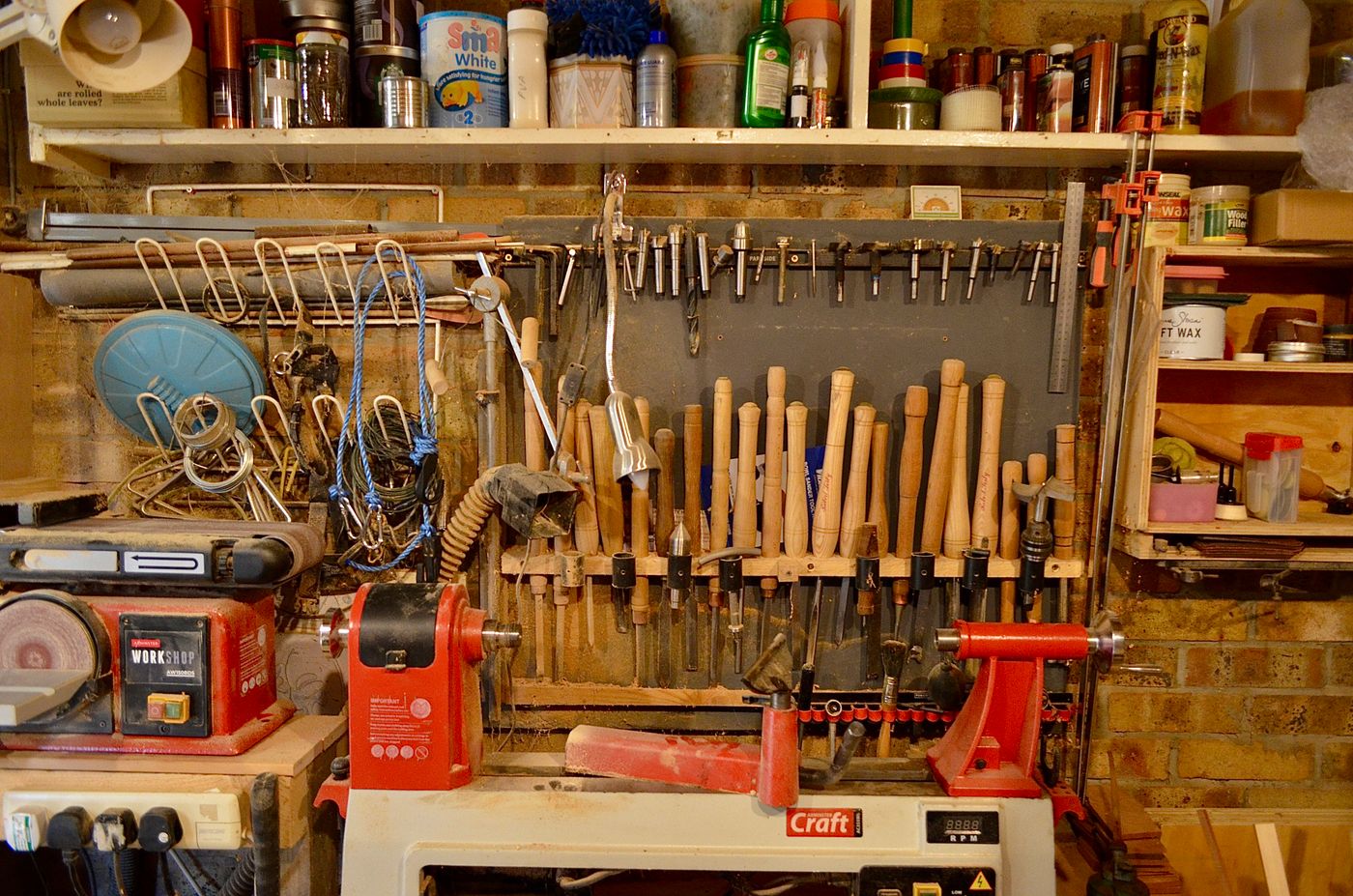
Correct lathe height puts the spindle at your elbow height, which is roughly 42 to 46 inches off the floor for most adults. Midi lathes on stands reach that range without modification. Full-size floor lathes are designed to hit that height directly. The second setup question is power: midi lathes plug into 115-volt outlets; full-size lathes require a dedicated 220-volt circuit.
Both questions get answered once, at installation. Getting them right means not having to lift a 400-lb machine later.
Stand height
The goal is spindle height at elbow height. When you stand in front of the lathe and hold a tool at a natural working angle, your elbow should be roughly level with the spindle centerline. A spindle too low forces you to hunch. A spindle too high puts your tools at an awkward downward angle.
For most adults standing upright:
- Elbow height is 42 to 46 inches
- Target spindle height is in that range
Midi lathes on their factory stands often hit 40 to 43 inches. If that’s too low for you, add a riser platform or machine mount pad between the stand and the floor.
Full-size floor lathes are typically designed to put the spindle at 43 to 46 inches. The Powermatic 3520C and Grizzly G0766 are both in this range. Check the machine’s dimensional drawing before assuming.
The right test is to stand in front of the installed machine with a gouge, rest it on the tool rest at a working angle, and see where your elbow falls. If you are bending, the machine is too low. If you are reaching up, it is too high.

Ballast and vibration
Mass kills vibration. A heavy machine vibrates less at speed than a light one. This is why full-size floor lathes at 400 to 726 lbs run smoother than midi lathes at 70 to 140 lbs.
For the WEN 3424T and similar lightweight midi lathes, the solution is added mass:
Sand-filled legs: Many midi lathe stands have hollow steel legs. Fill them with dry sand. A standard 40-lb bag of sand in each leg doubles the effective stand weight. Easy to do at setup.
Concrete-filled legs: More permanent than sand, more mass per leg. Pour and set before installing the lathe.
Rubber anti-vibration pads: A rubber mat under the stand feet reduces transmitted vibration to the floor (and back up from the floor), but does not add mass. Useful in combination with sand fill, less useful alone.
Floor anchoring: Bolting the stand to a concrete floor through rubber isolation pads is the most effective solution for a shop where the floor layout will not change. It adds the mass of the building slab to the effective system.
Heavier machines like the Jet JWL-1221VS at 121 lbs are noticeably more stable than a 70-lb machine without ballast. If you are between a lightweight and a heavier midi lathe, the weight difference matters at higher speeds and with out-of-round blanks.
115V vs 220V: what you actually need
Midi lathes: Most midi lathes run on standard 115-volt (US residential) circuits. The WEN 3424T draws about 5 amps. The Jet JWL-1221VS draws about 7 to 8 amps. A standard 15-amp household outlet handles both, with headroom for a dust collector if you are careful about load.
Full-size lathes: Most full-size floor lathes require 220-volt single-phase power. The Grizzly G0766 is 240V. The Powermatic 3520C is 220V single-phase. The Jet JWL-1840EVS can be configured for either 115V (at reduced power) or 220V.
Adding a 220-volt circuit requires an electrician unless you are wiring your own panel. The cost is typically $200 to $500 depending on panel distance. Budget for this before the machine arrives.

Footprint planning
The machine’s own dimensions understate the space requirement. You also need:
- Operator’s side: 3 to 4 feet clear for the turner, tools, and movement
- Opposite side: 2 to 3 feet for chip clearance and access to controls on the back of some machines
- Tailstock end: 3 to 4 feet for long spindle blanks extending past the tailstock
- Headstock end: 2 feet minimum, more for outboard turning on a sliding-headstock machine
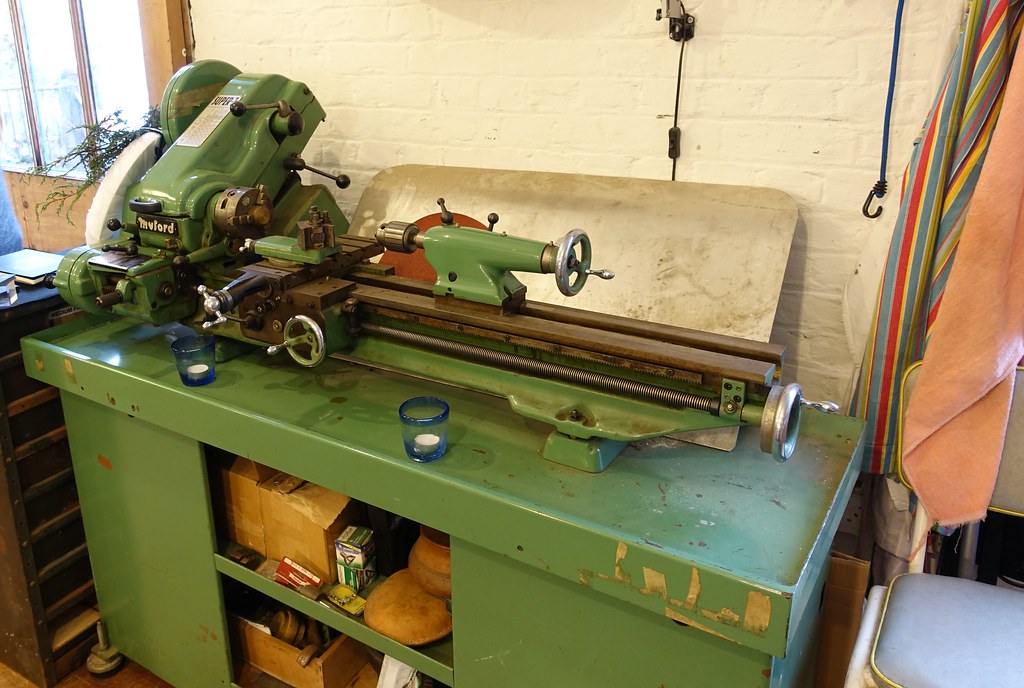
Approximate total floor areas by machine class:
| Machine class | Machine footprint | Recommended clear area |
|---|---|---|
| Midi on stand | ~18 x 40 in | 6 x 10 ft |
| Entry full-size | ~24 x 60 in | 8 x 12 ft |
| Full-size premium | ~28 x 72 in | 8 x 14 ft |
Chips travel. The turning zone generates shavings that can scatter 6 to 8 feet from the bed. Keep flammable materials (rags, finishing supplies) well back from that radius.
Storage within reach
Good shop layout puts the following within arm’s reach of the lathe without moving your feet:
- Tool rest holder (most lathes have this built in or as an optional accessory)
- Bowl gouge and roughing gouge close to the headstock
- Calipers and story sticks on the tool tray or a small shelf at lathe height
- Chuck key within reach but not on the floor
Keep finishing supplies, sandpaper, and supplies that you reach between cuts on a rolling cart or shelf at lathe height, not in a cabinet across the shop.
For the next layer of shop infrastructure, dust collection for woodturning covers collectors, air filtration, and respirators as a system. For the machine decisions that precede setup, the midi vs full-size guide covers the power and weight trade-offs in detail.