Powermatic 3520C Review: The Full-Size Benchmark
Powermatic 3520C reviewed: verified specs, what changed from the 3520B, cost against full-size rivals, and the used-market case for serious bowl turners.
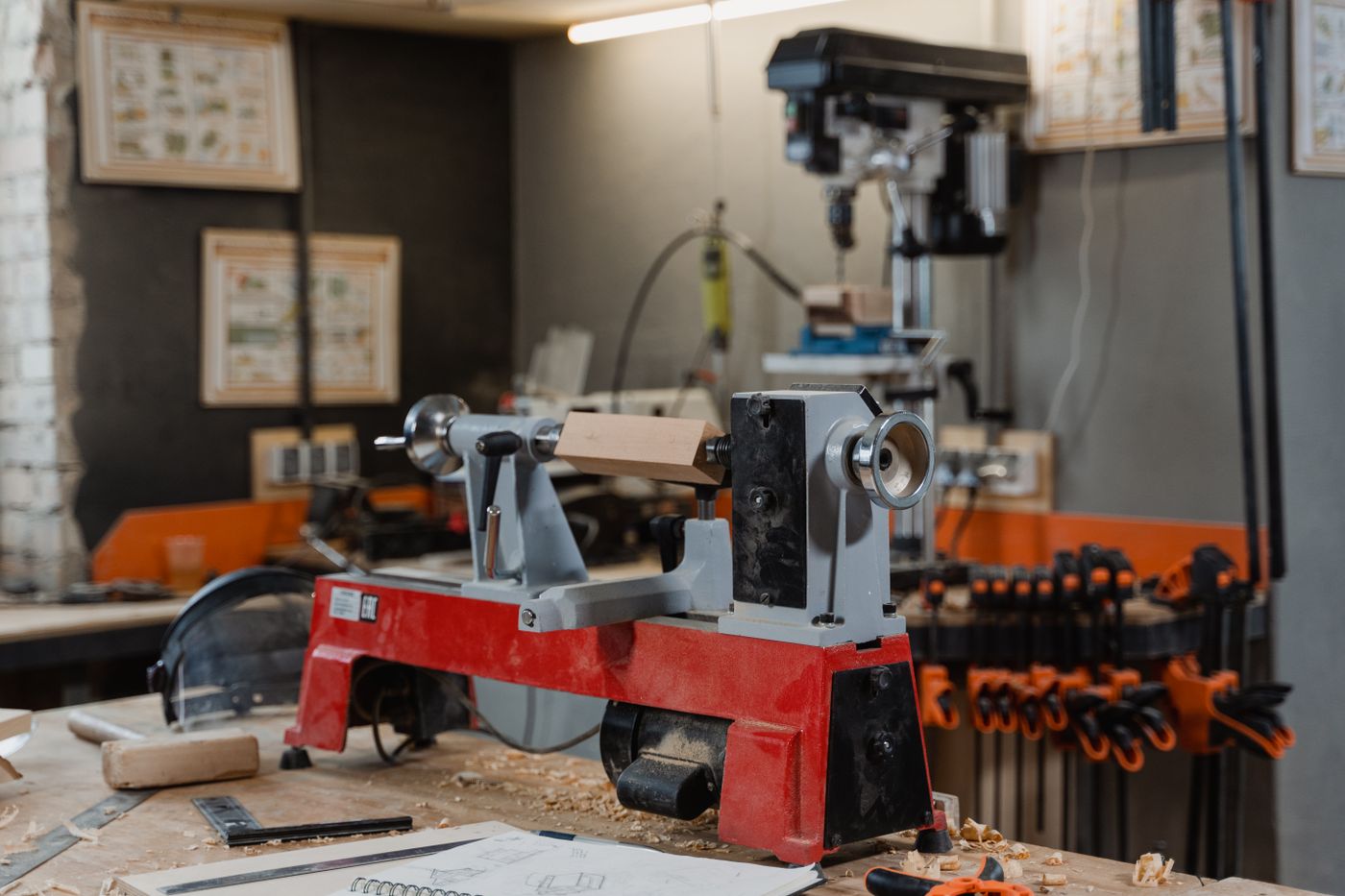
The Powermatic 3520C is the full-size lathe that serious hobby turners buy once and keep for twenty years. It lists at $5,999, weighs 726 pounds, runs on 220 volts, and swings 20 inches over the bed. Bowl turners call it the Mustard Monster after the yellow paint, and when you ask turners on the AAW forum and LumberJocks what they would buy if they could start over, the 3520C comes up more often than anything else in its class.
Here’s the honest position. This isn’t a lathe you impulse-buy. It requires 220-volt power, a freight delivery, and a shop floor that can take the weight. But if you’re turning bowls over 12 inches, doing large hollow forms, or simply want a machine you’ll never outgrow, the 3520C is the benchmark everything else in American turning gets measured against.
What the Powermatic 3520C actually is
The 3520C is a floor-standing, electronically variable-speed lathe from Powermatic, an American brand (now under Techtronic Industries) that has been building full-size shop equipment since the 1950s. The “35” in the model name is the bed length in inches, the “20” is the swing. Powermatic sells it as a 2 HP single-phase machine at 220 volts, and those numbers are verified on powermatic.com in June 2026.
What the spec sheet doesn’t tell you is the feel. The 726-pound mass means big, out-of-balance bowl blanks do not shake the machine. They shake the blank. That distinction matters at the roughing stage, when a fresh-cut 16-inch blank with bark and voids can throw vibration that walks a lighter lathe across the floor. The 3520C sits.
Spec and electrical reality
Every figure below is from powermatic.com, verified June 2026. The spindle thread size isn’t listed on the product page; it’s noted as unverified in the sources below.
| Spec | Powermatic 3520C | Source |
|---|---|---|
| Motor | 2 HP | powermatic.com |
| Voltage | 220V single phase | powermatic.com |
| Speed ranges | 15–1,200 & 40–3,200 RPM (two EVS ranges) | powermatic.com |
| Swing over bed | 20 in | powermatic.com |
| Distance between centers | 36 in | powermatic.com |
| Spindle bore | 5/8 in | powermatic.com |
| Spindle taper | MT2 | powermatic.com |
| Quill taper | MT2 | powermatic.com |
| Indexing | 48 positions (digital readout) | powermatic.com |
| Headstock | Sliding | powermatic.com |
| Net weight | 726 lb | powermatic.com |
| Warranty | 5 years | powermatic.com |
| Street price | $5,999 | powermatic.com |
The electrical situation needs attention before you order. The 3520C is a 220-volt machine. Most residential garages have a 240-volt circuit somewhere, often behind a dryer outlet, a welder receptacle, or a sub-panel. But if your shop runs entirely on 115-volt circuits, you need an electrician before you take delivery. Powermatic does not list amperage on the product page, so check the machine nameplate on delivery and confirm your circuit’s breaker is rated appropriately. Owners in forum threads typically report a 30-amp dedicated circuit.
The machine ships freight. Budget for a liftgate delivery, and have a plan for moving 726 pounds from the pallet to the spot. Most owners use a pallet jack to get it off the truck and a come-along or engine hoist to walk it into position. It’s not a one-day setup. Plan the day.
What changed from the 3520B to the 3520C
The 3520B was the machine this replaced, and it ran for years without a meaningful complaint. Used 3520Bs still sell briskly. The 3520C’s changes are real improvements, but they’re refinements on something that already worked:
Movable control box. The B’s control panel was fixed to the headstock. The C’s is on a magnetic mount and slides to wherever you stand. This matters when you move between the headstock end and the outboard position on large bowls, because you’re not walking back to the headstock every time you want to change speed.
Digital spindle indexing. The B had a 24-position mechanical index. The C has 48 positions with an LED readout that shows the current position. Owners who do segmented work, pen flats, or carved surfaces cite this as the most practically useful addition.
Height-adjustable riser blocks. The C ships with riser blocks that add 4 inches of height to both the headstock and tailstock. This brings the spindle center to a height that suits most turners without building a platform, and the adjustment travels let you tune it to your reach. The B had no height adjustment.
Increased mass. Powermatic’s own copy cites “increased overall mass” on the 3520C. By how much is not specified, but owners who have used both report noticeably less vibration on rough blanks.
The motor, swing, between-centers distance, and fundamental build are the same. A clean 3520B with a functioning motor is not a lesser machine for bowl turning. It is the 3520C without the ergonomic upgrades.
The used-3520B reality
Used 3520Bs move in the $2,000–$3,500 range depending on condition and your location. Owners on LumberJocks and the AAW forum consistently describe 10-to-20-year-old machines still running without bearing or motor replacement. That longevity is the argument for the used market: a Powermatic in good condition at $2,500 is a better lathe than a new $2,500 lathe from anyone else.
What to check before buying a used 3520B: confirm the motor runs smoothly without noise, check that the spindle threads are clean (chase them if needed), verify the bed ways aren’t worn from heavy outboard use, and run both speed ranges through their full travel while loaded with a blank if you can. The main failure points are the electronic speed control (solvable) and worn ways from decades of wet bowl blanks (harder to fix). A clean B is worth hunting.
Cost per pound against the full-size class
The 3520C at $5,999 is not the only full-size option. Two competitors sit beside it: the Powermatic 2020B (the same brand, smaller swing) and the JET 1642 class machines. Comparing cost against a known entry-class machine shows where the serious investment starts.
| Lathe | Price (verified June 2026) | Weight | Swing | Voltage |
|---|---|---|---|---|
| WEN LA3424 (entry midi) | $370 | ~65 lb | 12 in | 115V |
| JET JWL-1221VS (mid midi) | ~$990 | 121 lb | 12-1/2 in | 115V |
| Powermatic 2020B (full, smaller) | $5,939 | est. 500+ lb | 20 in | 220V |
| Powermatic 3520C | $5,999 | 726 lb | 20 in | 220V |
The 3520C and 2020B are priced within $60 of each other. The 3520C gives you 36 inches between centers versus the 2020B’s 20 inches, which is the whole difference for spindle workers and long turners. For a bowl-only shop the 2020B covers most work at comparable mass; for anyone turning anything over 20 inches or doing furniture work, the 3520C’s bed length is non-negotiable.
Who the 3520C is for, and who should wait
The 3520C is the right lathe if at least one of these is true:
You’re already turning bowls over 12 inches and feel the ceiling. A midi lathe’s 12-to-12-1/2-inch swing is a real limit, not a paperwork limit. If your blanks are hitting it, a full-size machine is the answer, and the 3520C is the answer in that class.
You have a dedicated shop with 220-volt power and a floor that isn’t going to move. The mass is the machine’s main virtue. Putting it on a soft floor or in a space where you can’t wire it properly wastes what you paid for.
You want to buy once. The AAW forum threads on long-term ownership are consistent: people who bought the 3520C or its 3520B predecessor don’t resell them. They turn on them for fifteen years, then leave them to family or sell them for nearly what they paid. That is unusual for shop equipment.
Wait if:
You are still turning mostly pens, small bowls, and spindles. A Jet JWL-1221VS handles that work perfectly, costs a fifth of the price, and runs on a household outlet. Buying a 3520C to turn 6-inch bowls is money that could go toward tools, a chuck, and a sharpening setup. The midi vs full-size lathe guide covers the capacity math in full, and the Jet JWL-1221VS review is the place to start if you are not sure whether full-size is justified.
You need 115 volts. The 3520C is a 220-volt machine and that’s not negotiable.
Your budget is under $4,000 and a used 3520B is not available. There are no new full-size lathes at that price point that match the 3520C’s build. Better to wait, save, or buy a clean B than to buy down on quality.
Accessories, chuck compatibility, and what to buy first
The 3520C ships with a face shield, a face plate, a spur center, and a live center. It doesn’t ship with a chuck. For bowl turning that omission matters immediately: a chuck is the first thing most turners add.
The spindle thread on the 3520C is a standard size for American full-size lathes. Any chuck designed for a Powermatic or labeled with the matching thread spec will seat directly. The Nova G3 chuck review covers the most popular four-jaw chuck in this class, and its jaw compatibility table walks through which Nova jaw sets work. The G3 fits the 3520C.
For tools, the full-size swing means you’ll want larger gouges than a midi turner typically runs. A 1/2-inch or 5/8-inch bowl gouge handles the scale of work the 3520C opens up. The first turning tools guide covers the carbide-versus-traditional trade-off and what to buy first. Budget for sharpening from day one: a dull gouge on a 3520C just makes larger catches.
For finishing, large bowls turned on this machine tend to go food-safe. The food-safe wood finish guide walks the options. And if you are planning to sell, the lathe projects that sell guide covers what the bowl market looks like at the hobby-to-semi-pro scale.
The Powermatic 3520C earns its reputation for a simple reason: it’s a machine people keep. Not because they can’t afford an upgrade, but because there’s nothing to upgrade to. If the swing, the voltage, and the price fit your situation, buy it. You won’t regret it in ten years.
For the Rockler listing, visit rockler.com and search “Powermatic 3520C.” Rockler carries the full Powermatic line and is an authorized dealer.