Powermatic 3520C vs Laguna Revo 18|36: Tradition vs Modern
Powermatic 3520C versus Laguna Revo 18|36 compared: $5,999 cast-iron tradition against $3,649 VFD induction design, with spec table and verdict by buyer type.
The Powermatic 3520C costs $5,999 with 20-inch swing, 726 lbs, and a five-year warranty. The Laguna Revo 18|36 costs $3,649 (220V) with 18-inch swing, VFD-driven variable speed from 50 to 3,500 RPM, and a sliding headstock. Both have 36 inches between centers and 1-1/4-inch-by-8-TPI spindles. The $2,350 difference is what this comparison is about.
These are two genuinely different machines built on different philosophies. The Powermatic is the American cast-iron tradition: DC motor, heavy construction, a five-year warranty backed by decades of model continuity. The Laguna reflects European-influenced shop-tool design: steel bed, VFD-driven induction motor, wide electronic speed range, and a price that competes with the used Powermatic market.
Spec table
| Spec | Laguna Revo 18|36 (220V) | Powermatic 3520C | |---|---|---| | Motor | 2 HP induction (VFD) | 2 HP | | Speed type | VFD, two belt ranges | EVS, two belt ranges | | Speed range (low) | 50-1,300 RPM | 15-1,200 RPM | | Speed range (high) | 135-3,500 RPM | 40-3,200 RPM | | Swing over bed | 18 in | 20 in | | Outboard swing | 32 in (base) | not specified | | Between centers | 36 in | 36 in | | Spindle | 1-1/4 in x 8 TPI | 1-1/4 in x 8 TPI | | Bed material | Steel (ASTM A36) | Cast iron | | Headstock | Sliding | Sliding | | Voltage | 220V (or 110V, 1.5 HP) | 220V | | Shipping weight | 570 lbs | 772 lbs (726 net) | | Warranty | “Lifetime Factory Support” | 5 years (stated) | | Street price | $3,649 | $5,999 |
Sources: Laguna Tools product page (lagunatools.com) and Powermatic 3520C product page (powermatic.com), verified June 2026. Note: Laguna warranty duration is not specified on the product page; contact Laguna to confirm terms.
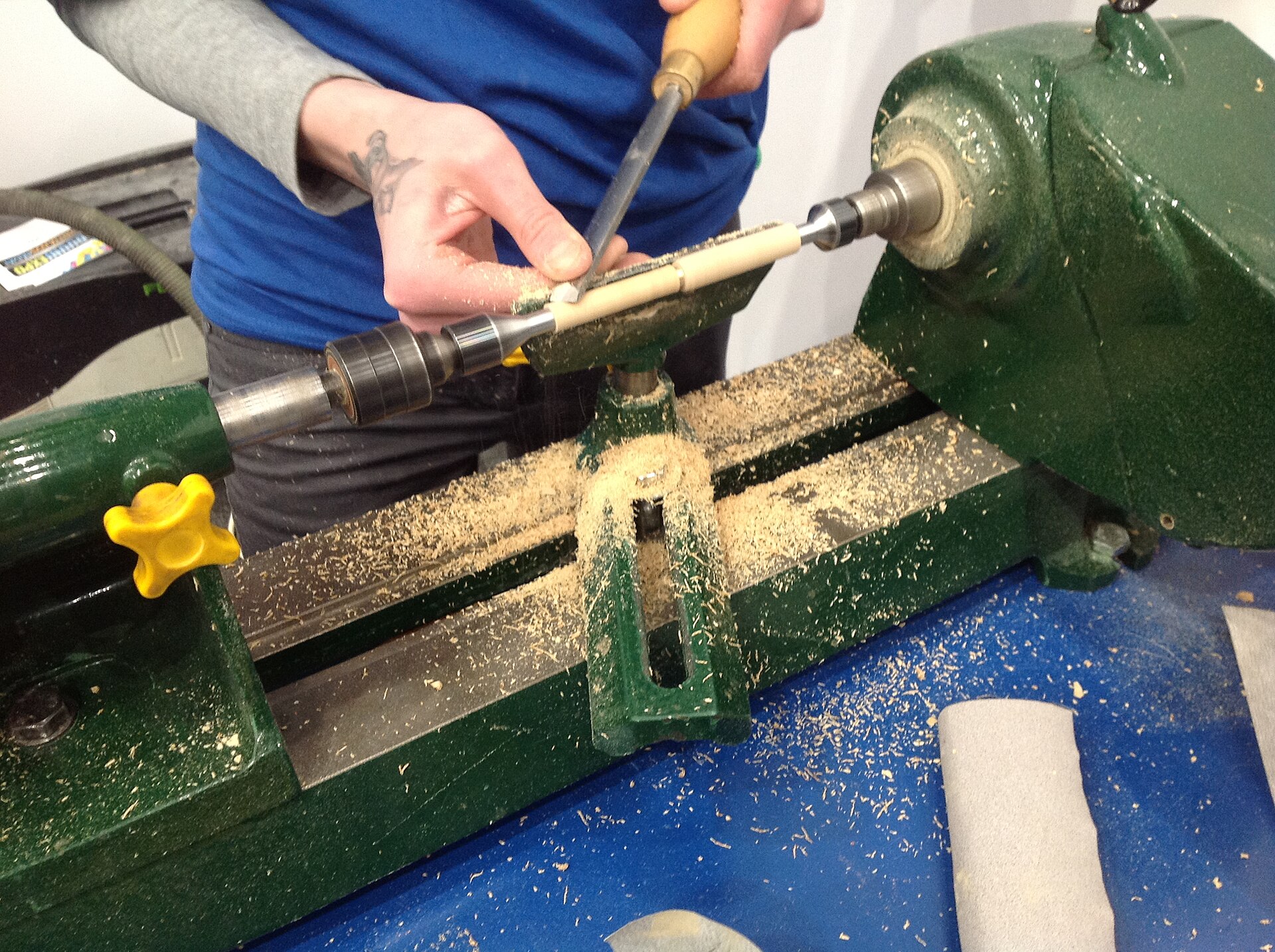
Both machines share the same spindle thread, the same between-centers distance, and both have sliding headstocks. The differences are swing (18 vs 20 inches), mass, and price. A Nova G3 chuck with a 1-1/4-inch insert threads onto either machine directly.
Where the Powermatic wins: swing, mass, warranty
Two more inches of swing matters when you’re turning a 17-inch natural-edge platter. The Powermatic’s 20-inch swing over the bed allows blanks just under 20 inches. The Laguna’s 18-inch swing creates a practical ceiling around 16 to 17 inches. The Laguna’s 32-inch outboard capacity addresses larger work, but that setup adds complexity.
The mass difference is the argument AAW turners make most consistently for the Powermatic. Large, unbalanced bowl blanks shake the blank rather than the machine when the lathe weighs 726 lbs. A fresh-cut 16-inch piece with bark and voids at 60 RPM sends cyclic vibration through the headstock. On a 726-lb machine with a solid headstock bearing, that vibration is absorbed. On a meaningfully lighter machine, some of it translates into movement.
The five-year warranty on the Powermatic is stated plainly. Laguna’s “Lifetime Factory Support” is a phrase that appears on the product page without defined coverage terms. Before committing $3,649, it is worth a phone call to Laguna to confirm what that covers and for how long.
Where the Laguna wins: price and voltage options
The $2,350 price difference is real. At $3,649 for the 220V version, or $3,599 for the 110V version with 1.5 HP, the Laguna Revo 18|36 puts a full-size VFD floor lathe within reach of turners who cannot justify $6,000. The 110V model eliminates the 220V requirement entirely, which matters significantly if your shop is wired only for standard household circuits.
The Laguna’s VFD speed range is wider at the low end: 50 RPM versus the Powermatic’s 15 RPM (both are slow; the practical difference is small). At the high end, 3,500 RPM versus 3,200 RPM. The VFD’s induction motor ramps up smoothly rather than lurching to full torque, which is helpful when starting a large, off-balance blank.
The Laguna’s steel bed is a design choice, not a compromise. Steel is more dimensionally consistent than cast iron and is used by several European-market lathe manufacturers. Whether it results in a different turning experience is a genuine debate in the AAW community with experienced turners on both sides.
The used market factor
The Powermatic 3520C holds value. Clean used 3520Bs (the previous model) trade in the $2,000 to $3,500 range, and 3520Cs hold similar ground. A used Powermatic gives the Powermatic experience at a price closer to the new Laguna. The Powermatic 3520C review covers the B-versus-C comparison and the used market in detail.
The Laguna Revo 18|36 is a newer market entrant with less established used pricing. If budget is the primary constraint and you are buying new, the Laguna 18|36 is the direct competitor. If you are willing to buy used, a clean Powermatic 3520B enters the picture at a similar price point.
Who should buy which
Buy the Laguna Revo 18|36 if: $3,649 versus $5,999 is a meaningful difference, and an 18-inch swing covers the bowls and hollow forms you plan to turn. The 110V model at $3,599 runs on a standard household circuit, which changes the cost calculation entirely if 220V wiring is not already in your shop. The VFD is capable, the sliding headstock works identically to the Powermatic’s, and the 1-1/4-by-8-TPI spindle accepts full-size chucks.
Buy the Powermatic 3520C if: you want the machine owners keep for twenty years and that holds its value when sold. The 3520C is the AAW community’s reference machine because of its mass, five-year warranty, documented ownership history, and authorized dealer network. For buyers who want certainty, the Powermatic is the choice where there are almost no surprises.
For the third major option in this price tier, the Grizzly G0766 review and the Grizzly vs. Powermatic comparison cover a 3 HP, 22-inch machine at roughly $4,000 that outperforms both on capacity specs. The Jet JWL-1840EVS review covers the entry-level full-size option in the $2,500 to $3,000 range. For buyers still deciding between midi and full-size, the midi vs. full-size lathe guide covers the category fork.