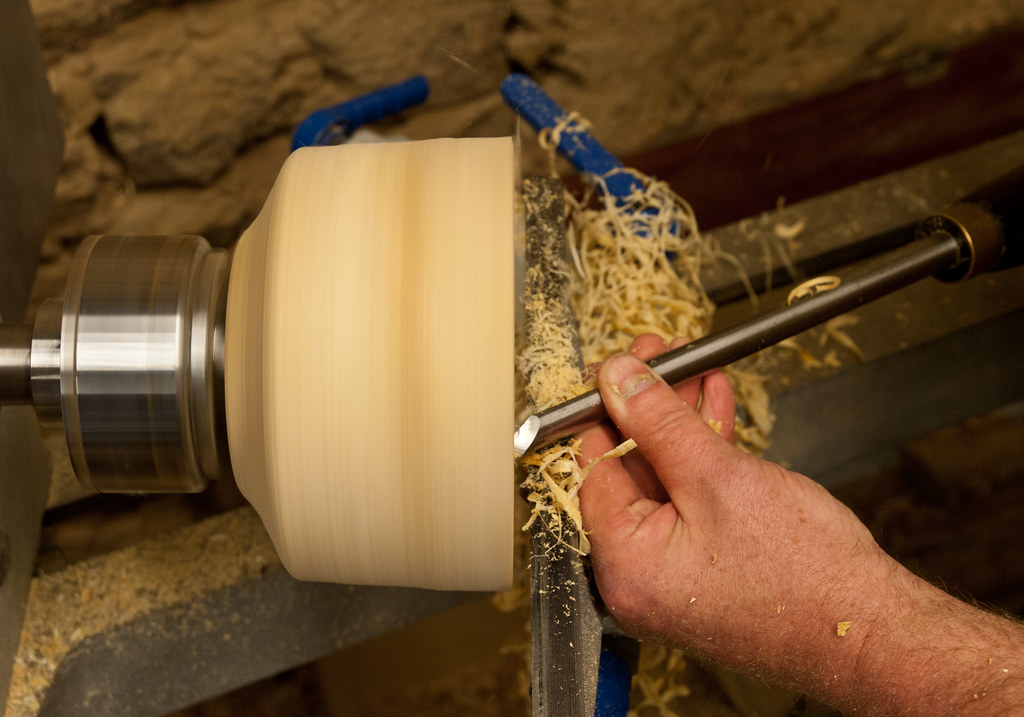
Rikon 80-808 Review: Slow-Speed Bench Grinder for Turners
The Rikon 80-808 reviewed: an 8-inch, 1 HP slow-speed bench grinder at 1,750 RPM and $290, and why slow speed matters for sharpening turning tools cleanly.
The Rikon 80-808 is a 1 HP, 8-inch slow-speed bench grinder running at 1,750 RPM. Woodturners prefer slow-speed grinders because lower wheel speed prevents burning high-speed steel tools during sharpening. It retails for approximately $290. Rikon also makes the 80-805 (1/2 HP, $135) and 80-820 (1 HP with wider wheels, $280). All three run at 1,750 RPM and use 8-inch wheels on a 5/8-inch arbor. Specs verified at Woodcraft, Rikon, and Highland Woodworking, June 2026.
This article covers the full Rikon slow-speed grinder lineup. If you are setting up your first sharpening station, the choice between the 80-805 and 80-808 is the primary decision. For pairing with the Oneway Wolverine jig, the 80-808 is the community’s recommendation.
The three Rikon slow-speed models
| Spec | 80-805 | 80-808 | 80-820 |
|---|---|---|---|
| Horsepower | 1/2 HP | 1 HP | 1 HP |
| Amps | 3A | 7A | 7A |
| Voltage | 120V | 120V | 120V |
| Wheel size | 8” x 1” | 8” x 1” | 8” x 1.5” |
| RPM | 1,750 | 1,750 | 1,750 |
| Arbor | 5/8” | 5/8” | 5/8” |
| Included wheels | 60- and 120-grit AO | 60- and 120-grit AO | 60- and 120-grit AO |
| Base construction | Cast iron, anti-vibration feet | Cast iron, anti-vibration feet | Cast iron |
| Current price | $134.99 (Woodcraft) | ~$290 (Woodcraft) | $279.99 (Highland) |
| Production status | Active, in stock | Active (OOS at Woodcraft June 2026) | Active (backorder June 2026) |
Availability note (June 2026): The 80-808 is listed as currently unavailable at Woodcraft; the 80-820 is on backorder at Highland Woodworking. Rikon’s own website and specialty retailers (Woodturners Wonders, Rockler) may have current stock. Check multiple sources before assuming unavailability is permanent.
The 80-820 differs from the 80-808 only in wheel width: 1.5 inches versus 1 inch. The wider wheel provides more surface area per pass, which reduces the grinding pressure needed for each stroke and dissipates heat slightly better. For turners who do heavy reshaping work, the 80-820’s wider wheel is worth the similar price.
Why 1,750 RPM matters
Standard bench grinders run at approximately 3,450 RPM. The Rikon’s 1,750 RPM is half that speed. The practical consequence is heat.
When grinding at 3,450 RPM, the wheel contacts the tool at twice the surface speed of a 1,750 RPM wheel. More contact cycles per second means more friction and more heat per unit of time, regardless of how lightly you press. At 3,450 RPM, a beginner grinding a bowl gouge can blue the tip in a single pass if their technique is wrong. At 1,750 RPM, the same bad technique takes longer to produce damage and is easier to catch and correct.
This matters specifically for high-speed steel (HSS), which is the steel in most modern turning tools. HSS holds its hardness (and thus its edge-holding ability) until it reaches a temperature that visibly shows as a blue-to-purple discoloration. Once blued, the affected metal has lost its temper and must be ground back past the damage. At 1,750 RPM, that threshold is much harder to reach accidentally.
For CBN wheels (which cut cooler than aluminum oxide even at standard speeds), the slow-speed advantage is somewhat reduced but still present. The AAW community’s preference for slow-speed grinders predates the widespread adoption of CBN wheels and persists even for CBN users because the lower speed gives more physical time per pass for angle adjustments.
The stock wheels and what to do about them
All three Rikon models ship with a 60-grit and 120-grit aluminum oxide wheel. The AAW community’s consistent recommendation: the stock wheels work, but upgrade to CBN as soon as budget allows.
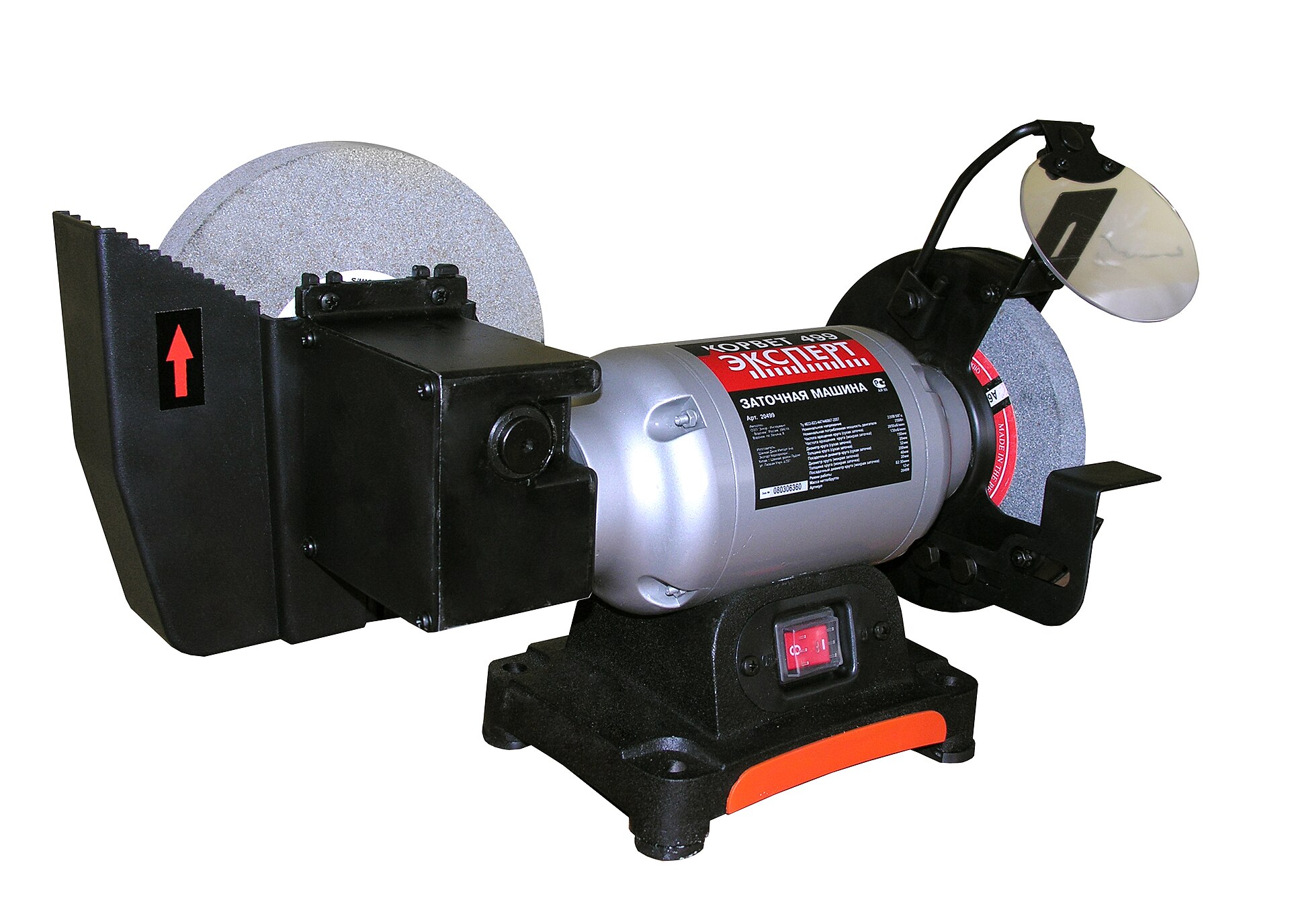
Why aluminum oxide works: It cuts steel, produces a usable edge, and costs nothing extra since it’s included. For a beginner learning grinder technique, the stock wheels are adequate.
Why CBN is better: Cubic boron nitride wheels cut faster (less time per pass, less heat accumulation), do not glaze (their cutting surface does not get worn smooth the way aluminum oxide does), and do not need dressing. A dressed aluminum oxide wheel produces the same quality of cut as a new CBN wheel, but dressing takes time and attention. CBN wheels effectively maintain themselves.
Typical CBN wheel set (one per wheel) for the 8-inch Rikon runs $80 to $120 from suppliers including Woodturners Wonders and CBN Wheel. The investment pays back in wheel longevity: a CBN wheel used for hobby sharpening can last a decade.
Wolverine compatibility
The Oneway Wolverine sharpening jig, the most widely used jig system among AAW members, is sold bundled with the Rikon 80-805 by specialty retailers. All three Rikon models share the same wheel diameter (8 inches) and arbor height, so the Wolverine bases mount identically on the 80-805, 80-808, and 80-820.
The cam-lock Wolverine bases attach below the wheel shrouds and require the arbor to be approximately 6 to 6.5 inches above the mounting surface. Rikon’s standard bench grinder geometry meets this requirement.
The combination of an 8-inch Rikon grinder with the Oneway Wolverine system is the most commonly recommended starting sharpening setup in the AAW community. The Wolverine base kit ($104) plus Vari-Grind 2 ($127) plus the 80-808 grinder (~$290) brings the complete setup to approximately $521 before optional CBN wheel upgrades.
Owner feedback
AAW Forum threads on grinder selection (multiple threads verified June 2026) show a consistent pattern:
1 HP is the community recommendation. An AAW thread comparing 1/2 HP and 1 HP Rikon models described the 1/2 HP as “underpowered for anything other than recreational use.” The 1 HP models were described as having power equal to the Baldor grinder at roughly one-fifth to one-quarter the price.
Upgrade the stock accessories. Multiple AAW posts noted the stock tool rest and lamp on the Rikon as “worthless” and planned for replacement from the start. Since most turners replace the tool rest with the Wolverine jig system anyway, the stock rest’s quality is irrelevant. The lamp is a separate quality issue.
CBN wheel endorsement. The most consistent recommendation across every AAW thread on the Rikon was to switch to CBN wheels and not look back. One owner noted having bought CBN wheels at the same time as the grinder and never having needed to address sharpening friction in the years since.
How it compares
Against the Baldor 7306 (~$600 to $800+): The Baldor is a 7-inch, 1/2 HP industrial grinder at 1,800 RPM. AAW members describe it as the machine they buy once and keep for decades. Its build quality is industrial-class; a well-maintained Baldor from the 1990s still turns up in shop tours today. The Rikon 80-808 counters with double the horsepower (1 HP vs 1/2 HP), a larger wheel (8 inch vs 7 inch), and less than half the price. For a hobby turner who changes shops or setups, the Rikon is the practical choice. For a production turner setting up a permanent station and planning to keep the grinder for 20 years, the Baldor case is real.
Against standard-speed bench grinders: A standard grinder (3,450 RPM) in the same size class costs $50 to $100. The $85 to $190 premium for the Rikon’s slow speed is the cost of the heat management advantage. For a beginner who is learning grinding technique and will inevitably make high-heat passes, that premium is a mistake-prevention investment.
Who the Rikon is for
Woodturners who want the AAW-standard sharpening station at a reasonable price. Anyone who will pair it with the Oneway Wolverine jig. Anyone who grinds turning tools frequently and wants to use CBN wheels without the $600 Tormek investment.
The 80-805 at $135 is the starting point for someone who wants slow-speed grinding now and plans to upgrade to the 80-808 later. The 80-808 or 80-820 at $280 to $290 is the direct purchase for anyone who expects to turn seriously.
See the Oneway Wolverine review for the jig that pairs with this grinder. The sharpening setup guide covers the full station including CBN wheel selection and Vari-Grind 2 calibration. The first turning tools guide covers what goes on the tool rest once the tools are sharp.