Wen 3424T Review: Fixed Speeds, Budget Price, Long Bed
Wen 3424T (now sold as the LA3424): five belt-drive speeds from 520 to 3,400 RPM, 12-inch swing, 18-inch between centers, $369 entry-level pricing.
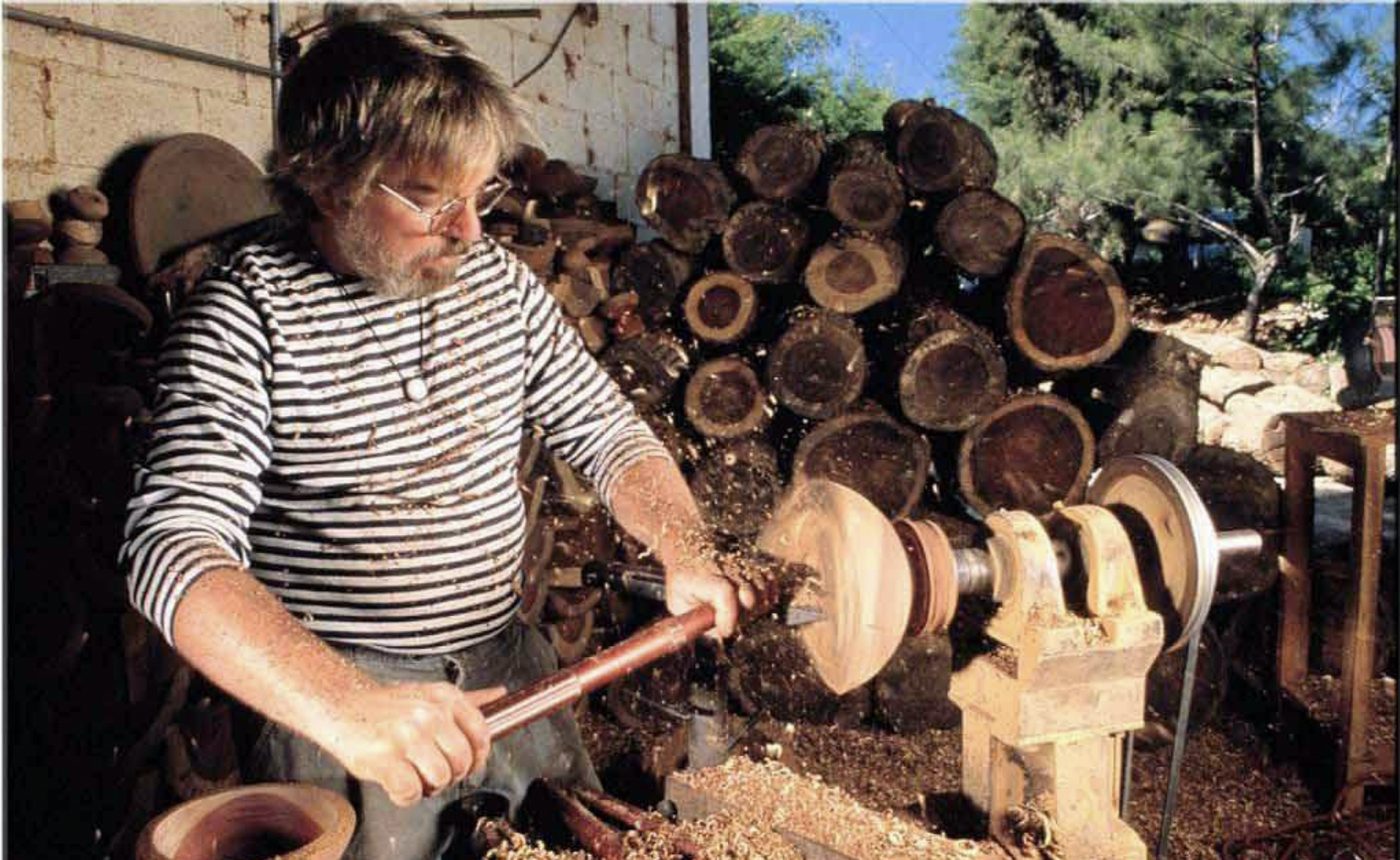
The Wen 3424T, now sold as the WEN LA3424, is a 4.5-amp bench lathe with five fixed belt-drive speeds from 520 to 3,400 RPM, 12-inch swing, and 18 inches between centers at $369 as of June 2026. Speed changes require stopping and moving the drive belt manually. No electronic variable speed.
At a third of the price of the Jet JWL-1221VS or Laguna Revo 1216, the Wen is the lathe for someone who wants to try woodturning before committing to a mid-range machine. The absence of variable speed is the defining limitation. Five fixed belt steps cover the basic range, but you can’t dial in 850 RPM for a specific bowl diameter: you’re picking between 520 and 900, and neither is exactly right.
The spec sheet
| Spec | WEN 3424T / LA3424 |
|---|---|
| Motor | 4.5A, 120V, 60 Hz |
| Speed settings | 5 fixed: 520, 900, 1,400, 2,150, 3,400 RPM |
| Speed type | Belt-drive step-pulley, not electronic variable |
| Swing over bed | 12 inches |
| Distance between centers | 18 inches |
| Spindle thread | 1 inch × 8 TPI |
| Tailstock taper | MT2 |
| Tailstock quill travel | 2 inches |
| Tool rest length | 7-7/8 inches |
| Weight | 70.3 lbs |
| Warranty | 2 years |
Source: WEN LA3424 product page (wenproducts.com) and WEN 3424 owner’s manual (ManualsLib), both verified June 2026.
One spec WEN does not publish: horsepower. The 4.5-amp motor at 120V puts the estimated output in the 0.5 HP range by electrical calculation, but WEN’s spec sheet lists amps only. Don’t use a third-party HP estimate for comparison against machines whose manufacturers publish actual rated HP.
Model name note: WEN renamed the 3424T to the LA3424 when they updated their product line naming conventions. Specs are identical; parts cross-reference. The 3424T designation appears on older units and refurbished stock; the LA3424 is current production.
Five fixed speeds and what that means
The 3424T’s drive system uses a belt-and-pulley arrangement with five step positions. Changing speed means stopping, opening the belt cover, and moving the belt to a different pulley step. The operation takes about 30 seconds once you’ve done it a few times.
The five speeds and their typical use:
| Step | RPM | Typical use |
|---|---|---|
| 1 | 520 | Large unbalanced blanks, fresh wet wood |
| 2 | 900 | Bowls 8 to 12 inches, roughing passes |
| 3 | 1,400 | Bowls 4 to 8 inches, general turning |
| 4 | 2,150 | Spindle work, small pieces |
| 5 | 3,400 | Pen turning, finishing passes |
On a variable-speed machine, you dial in exactly the RPM you want for a piece’s diameter and balance. On the Wen, you pick the closest step. For most beginner projects this is fine. For experienced turners who routinely set specific RPM for each blank, the belt-change workflow is a real friction point.
There is no emergency stop button on the 3424T. The main on/off switch is the only control. Position it within easy reach before starting any session.
Eighteen-inch between-centers: the genuine strength
At 18 inches between centers, the Wen outpaces the Laguna Revo 1216 (15.5 inches) by a meaningful 2.5 inches. It falls 2 inches short of the Rikon 70-220VSR’s 20 inches, landing between the Laguna and the Rikon in between-centers capacity. The Jet JWL-1221VS at 21 inches is still the longest bed in the class.
For spindle work, center distance matters: a full-length chair leg, a 16-inch tool handle, a set of stair balusters. At $369, this is the only machine in the price range that offers 18 inches. Most budget alternatives top out at 12 to 14 inches.
The 12-inch swing is standard. Twelve inches means pieces up to 12 inches in diameter; comfortable recurring work on this machine runs 4 to 10 inches for consistent vibration-free results with rough turning stock.
Build quality at the price
At 70.3 lbs, the Wen is significantly lighter than the Jet (121 to 125 lbs) and Laguna (118 lbs). The headstock and bed are cast iron. Cast iron was the right call at this price versus aluminum-bed alternatives: it damps vibration better. But 70 lbs is still light for a full 12-inch swing lathe.
Unbalanced wet-wood blanks generate more transmitted vibration on the Wen than on heavier machines. The standard fix: bolt the lathe down or add weight to the base. This is normal bench-lathe practice and resolves most vibration issues.
The included accessory set is complete for the price: headstock spur center (MT2), tailstock live center (MT2), 3-1/8-inch faceplate, 7-7/8-inch tool rest, knockout rod, flat wrench, and two hex wrenches. The faceplate is worth noting specifically. Many budget lathes omit it, requiring a separate $25 to $40 purchase before you can do any faceplate turning. The Wen includes it.
Owner feedback
Across 64 aggregated ratings averaging 4.4 out of 5 stars (tool.report, verified June 2026), and independent reviews from modernwoodturning.com and thewhittlingguide.com, the consistent positives were smooth operation, quick setup, and good performance relative to the price. One owner described it as “hard to beat for the price.” Several noted the cast iron construction was better than expected at the entry price point.
What owners flagged:
The belt-change speed system comes up consistently in longer reviews. Operators who had previously used variable-speed machines noted the workflow interruption. For pen turning and spindle work with predictable piece sizes, this matters less; for bowl turning where you adjust RPM as a blank comes into round, it requires more planning.
Plastic components on internal parts were noted by thewhittlingguide.com as a long-term wear concern, though no specific failure was reported in sources reviewed.
The hot motor issue: A thread on Penturners.org documented one owner measuring the motor casing at approximately 200°F during extended turning sessions. The forum’s best explanation was an over-tensioned drive belt placing excessive load on the motor. Another thread participant noted that older Jet lathes also ran hot under similar conditions without incident. No motor failure was reported in the thread. The practical guidance: follow the manual’s belt tension spec, avoid running the lathe at full load for extended continuous sessions without cooling breaks, and check belt tension if the motor runs warmer than expected.
How it stacks up
Against the Jet JWL-1221VS ($989.99): The Jet has continuous electronic variable speed from 60 to 3,600 RPM, 55 more lbs of mass, a 5-year warranty, and 21 inches between centers. The $620 price difference buys all of that. For someone committed to woodturning, the Jet’s variable speed is the argument. For a beginner who isn’t certain they’ll stay with it, the Wen’s price is the counter-argument.
Against the Laguna Revo 1216 ($1,099): The Laguna has PWM electronic variable speed (50 to 3,500 RPM), 48 more lbs, 16-inch outboard turning, and a bed that’s actually 2.5 inches shorter (15.5 vs 18 inches). The Wen’s longer bed wins for spindle work; the Laguna wins for bowl turning and outboard capability.
Against a used Rikon 70-220VSR ($400 to $650): A used Rikon 70-220VSR in good condition puts you on a variable-speed machine with 115 lbs of mass for $30 to $280 more than the Wen. That’s a compelling used-market alternative for someone whose budget extends to that range.
The spindle thread is 1 inch by 8 TPI across all these machines. A Nova G3 chuck or any standard 1-inch-by-8-TPI chuck transfers from the Wen to any upgrade machine later.
Who the 3424T is for
First-time turners who want to get on a lathe and learn before committing to a $1,000 machine. Program shops and school settings where cost matters and variable speed is less critical. Anyone who turns primarily spindle work, pens, and smaller bowls and can work within five fixed speed steps.
If you already know you want continuous variable speed, or if you’ve tried turning and are ready for a dedicated machine, the $620 gap to the Jet JWL-1221VS is worth considering before buying the Wen.
For setup: the first turning tools guide covers what goes on the tool rest; the sharpening setup guide keeps them sharp. Run the lathe on a standard 120V household circuit; no special wiring is required.